 About Pyzit
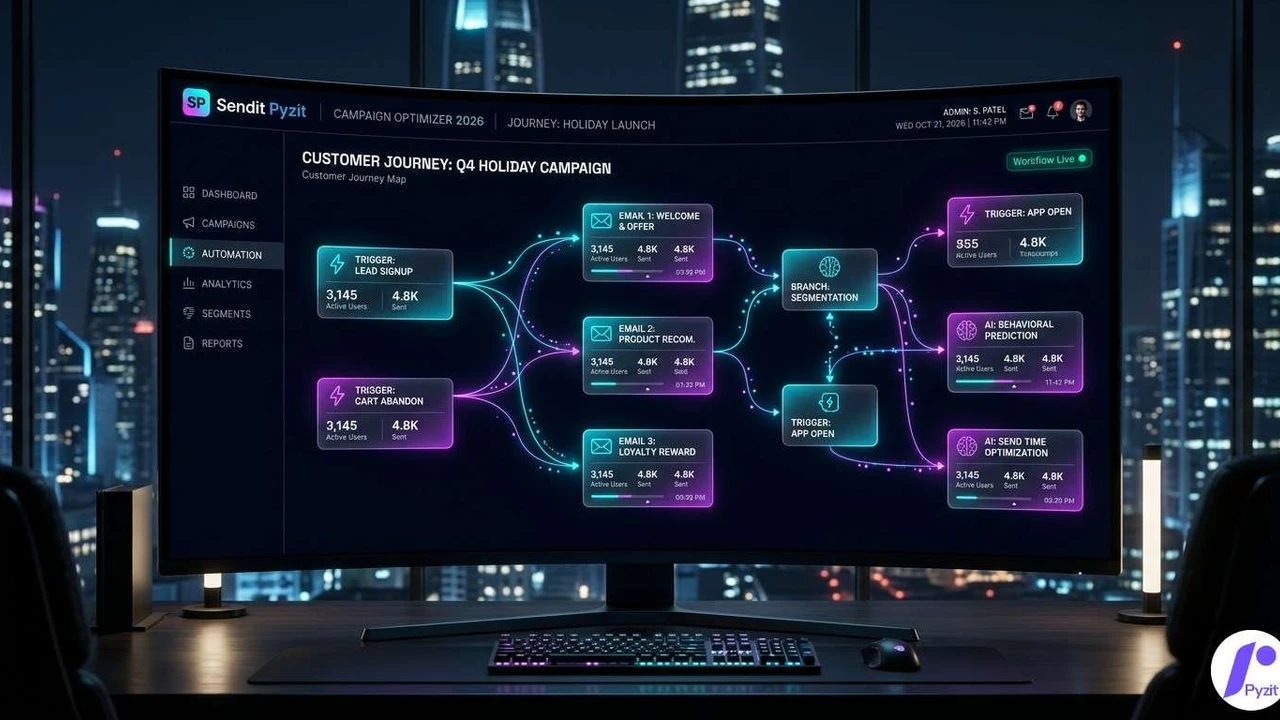
Email marketing automation is the process of sending targeted emails to subscribers automatically based on predefined triggers, behaviors, or schedules.
Instead of manually sending each email, you create workflows that run in the background. These workflows ensure that each subscriber receives the right message at the right time—whether they just signed up, abandoned a cart, or completed a purchase.
In simple terms:
👉 It’s like putting your email marketing on autopilot—with intelligence built in.
Why Email Automation Matters in 2026
In 2026, digital marketing is no longer about sending mass emails and hoping for results. Customers expect timely, relevant, and personalized communication. That’s where email marketing automation becomes essential. It allows businesses to engage users at the right moment—without manual effort—while scaling communication across thousands (or millions) of subscribers.
With increasing competition, shorter attention spans, and AI-driven personalization becoming the norm, automation is no longer optional—it’s a core growth strategy.
How Email Marketing Automation Works
Email automation relies on three key components:
1. Triggers
Triggers are events that start an automation. Examples include:
Signing up for a newsletter
Downloading a resource
Making a purchase
Visiting a specific page
2. Workflows
A workflow is a sequence of automated emails triggered by user actions. It can include:
Welcome emails
Follow-ups
Reminders
Upsell messages
Workflows can be simple (one email) or complex (multi-step journeys with conditions).
3. Timing & Conditions
Automation tools allow you to control:
When emails are sent (instantly, after hours/days)
Conditions (e.g., “only send if user didn’t open previous email”)
This ensures your messaging feels natural—not spammy.
Types of Email Marketing Automation
1. Drip Campaigns
Drip campaigns are pre-written email sequences sent over time.
Example:
A new subscriber receives:
Day 1: Welcome email
Day 3: Product introduction
Day 5: Case study
Day 7: Special offer
They “drip” information gradually to nurture leads.
2. Behavioral Emails
These emails are triggered by user actions.
Examples:
Cart abandonment reminders
Product recommendations based on browsing
Re-engagement emails for inactive users
They are highly personalized and often have higher open and conversion rates.
3. Transactional Emails
These are functional emails triggered by transactions.
Examples:
Order confirmations
Shipping updates
Password resets
Although operational, they are also an opportunity to build trust and upsell.
Benefits of Email Marketing Automation
1. Higher ROI
Automation helps deliver targeted messages, which leads to:
Better open rates
Higher conversions
Increased customer lifetime value
Email remains one of the highest ROI marketing channels.
2. Time Efficiency
Once workflows are set up, they run automatically. This allows teams to focus on strategy instead of repetitive tasks.
3. Personalization at Scale
Automation tools use user data (behavior, preferences, history) to deliver personalized experiences—even to large audiences.
4. Improved Customer Experience
Timely, relevant emails create a smoother journey for users—from awareness to purchase and beyond.
Real-World Example: SaaS Onboarding
Imagine a SaaS company onboarding a new user:
Sign-up Trigger → Welcome email sent instantly
Day 2 → Tutorial email explaining key features
User inactive for 3 days → Reminder email with tips
User completes setup → Advanced features email
After 7 days → Upgrade offer
This entire journey runs automatically—guiding users toward activation and conversion without manual intervention.
Tools for Email Marketing Automation
There are many tools available, ranging from beginner-friendly to advanced platforms. Common features include:
Drag-and-drop workflow builders
Audience segmentation
Analytics and reporting
Personalization options
One emerging tool in this space is Pyzit, which focuses on simplifying automation workflows while offering powerful targeting and analytics capabilities.
Other well-known platforms include Mailchimp, HubSpot, and ActiveCampaign.
Tools Overview (With Focus on Pyzit)
Choosing the right automation tool is essential for success. A good platform should offer:
Easy workflow creation
Advanced segmentation
Behavioral tracking
Performance analytics
One emerging solution in this space is Pyzit.
Why Pyzit Stands Out
Pyzit is designed to simplify email marketing automation while delivering powerful results. It is especially useful for startups, SaaS businesses, and growing teams.
Key advantages include:
User-Friendly Interface: Build automation workflows without technical complexity
Smart Segmentation: Target users based on behavior and preferences
Real-Time Automation: Instantly respond to user actions
Scalable Performance: Manage campaigns as your business grows
Actionable Insights: Track performance and optimize campaigns easily
With tools like Pyzit, even beginners can create professional-grade automation systems.
Start Your First Automation
Getting started with email marketing automation doesn’t have to be complicated:
Define your goal (onboarding, sales, engagement)
Choose a platform like Pyzit
Create a simple workflow (e.g., welcome series)
Write clear, value-driven emails
Monitor performance and improve over time
Final Thoughts
Email marketing automation is one of the most powerful tools in modern marketing. It is no longer just a convenience—it’s a necessity in 2026. It empowers businesses to deliver personalized, timely, and effective communication at scale.
By leveraging tools like Pyzit, you can streamline your marketing efforts, improve customer engagement, and drive consistent growth.
👉 Start your first email automation today and transform how you connect with your audience — and turn your email list into a revenue engine.